
When a dog starts taking longer to get up, hesitates before climbing stairs, or seems less interested in running around, it is easy to assume that age is simply catching up with them. Sometimes, though, those small changes point to a hip or joint problem that deserves closer attention.
A Dog Hip Brace may be one option considered for dogs that need additional support around the hip area. But a brace is not a universal solution. Before using one, it helps to understand what it does, when it may be useful, and why getting the underlying problem checked matters.
What Is a Dog Hip Brace?
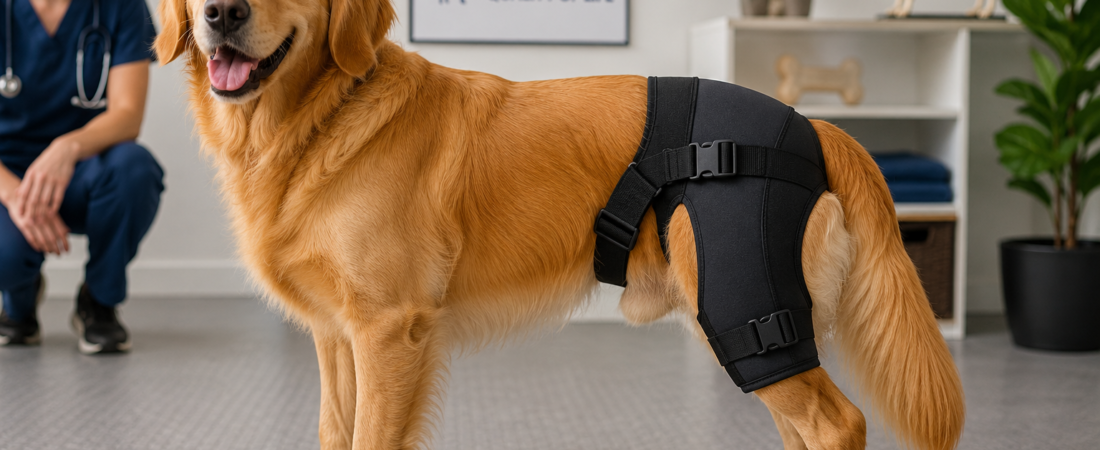
A Dog Hip Brace is an external support designed to fit around a dog’s hip and pelvic area. Depending on the design, it may help provide stability while the dog is standing or moving.
Think of it as supportive equipment rather than a treatment by itself.
Hip problems can develop for different reasons, including hip dysplasia, arthritis, injuries, and age-related changes. Because these conditions are not identical, the same type of support may not be appropriate for every dog.
A Dog Hip Brace is an external support designed to help provide stability around a dog’s hip and pelvic area. It may assist some dogs with mobility, but it does not cure hip dysplasia or replace veterinary diagnosis and treatment. Proper sizing and professional guidance are important for safe use.
Why Might a Dog Need Hip Support?
Dogs do not always make it obvious that something hurts. Many simply become quieter or change the way they move.
You might notice your dog:
- Taking longer to stand after sleeping
- Avoiding stairs or jumping onto furniture
- Walking more slowly than usual
- Showing stiffness after exercise
- Using the back legs differently
- Losing interest in activities they previously enjoyed
- Struggling to maintain balance on slippery floors
These signs are worth paying attention to, particularly when they persist or gradually become more noticeable.
Importantly, these symptoms do not automatically mean your dog has a hip problem. A veterinarian can help determine whether the issue involves the hip, knee, spine, muscles, or another part of the body.
Can a Hip Brace for Dogs Help With Hip Dysplasia?
Hip dysplasia is a developmental condition in which the hip joint does not develop and function normally. Over time, abnormal movement within the joint can contribute to arthritis and discomfort. (Merck Veterinary Manual)
This is important because a Hip Brace for Dogs cannot reshape or repair an abnormal hip joint.
In some situations, external support may be considered as part of a broader mobility strategy. However, treatment decisions depend on the individual dog, including age, weight, severity of symptoms, activity level, and overall health.
Veterinary care may involve weight management, controlled exercise, rehabilitation, medication when appropriate, or surgery in selected cases. (Cornell University College of Veterinary Medicine)
Finding a Comfortable Dog Hip Brace
If your veterinarian recommends trying a brace, don’t choose one based solely on your dog’s breed or size.
A good fit should allow your dog to move naturally without creating unnecessary pressure. Pay attention to:
- Accurate body measurements
- Secure but comfortable fastening
- Freedom of movement
- Skin contact and possible rubbing
- Bathroom access
- Your dog’s reaction while walking
A brace that is too tight may cause discomfort, while one that is too loose may shift during movement and provide little useful support.
It is also worth remembering that dogs vary considerably in body shape, even dogs of the same breed can need different fits.
How to Introduce a Hip Brace
Putting unfamiliar equipment on a dog for the first time can be an adventure.
Rather than fastening it and expecting your dog to walk normally, introduce it slowly. Let your dog sniff and inspect the brace first. When you eventually put it on, keep the first session brief and observe their movement.
Look for signs of discomfort, excessive licking at the brace, unusual resistance, changes in gait, or skin redness.
If your dog seems significantly uncomfortable, remove the brace and speak with your veterinarian rather than simply tightening or repositioning it.
Everyday Ways to Support Hip Health
A brace is only one possible part of managing mobility problems.
For many dogs with joint conditions, maintaining an appropriate body weight is particularly important because excess weight can increase the mechanical load placed on joints. Controlled, low-impact activity can also help maintain muscle strength and mobility when recommended by a veterinary professional. (Merck Veterinary Manual)
You can also make your home easier for a dog with mobility difficulties.
For example, non-slip rugs can provide better footing on smooth floors. Keeping food and water somewhere easily accessible may reduce unnecessary movement, while limiting repeated jumping from high furniture can be sensible for dogs with joint problems.
These small adjustments often matter more than people expect.
When Should a Veterinarian Check Your Dog?
If your dog develops sudden lameness, severe pain, difficulty standing, or refuses to put weight on a leg, professional veterinary attention is important.
For less urgent changes, such as gradually increasing stiffness or reluctance to exercise, an appointment is still worthwhile. Hip dysplasia and other orthopedic conditions can require physical examination and imaging to understand what is actually happening inside the joint. (Cornell University College of Veterinary Medicine)
A proper diagnosis makes it much easier to decide whether a brace, rehabilitation, medication, lifestyle changes, or another approach makes sense.
Frequently Asked Questions
Is a Dog Hip Brace a treatment for hip dysplasia?
No. A Dog Hip Brace is supportive equipment, not a cure for hip dysplasia. It may be considered in certain circumstances, but it cannot correct the underlying abnormal development of the hip joint.
Can older dogs use a Hip Brace for Dogs?
Some older dogs may benefit from additional support, but age alone is not enough to determine whether a brace is suitable. A veterinarian should consider the dog’s diagnosis, mobility, comfort, and overall health.
Can I use a dog hip brace instead of veterinary treatment?
No. A brace should not be used as a substitute for professional evaluation, especially when a dog is experiencing pain, limping, or worsening mobility.
Final Thoughts
Seeing a dog struggle with something they once did effortlessly can be upsetting. The good news is that mobility problems do not always mean a dog has to stop enjoying everyday life.
A Dog Hip Brace may provide useful external support for some dogs, but it should be viewed as one potential tool rather than a quick fix. The safest starting point is understanding why the dog is having trouble in the first place.
Once the underlying issue is identified, you and your veterinarian can make more informed decisions about mobility support, exercise, weight management, rehabilitation, and other appropriate care.