
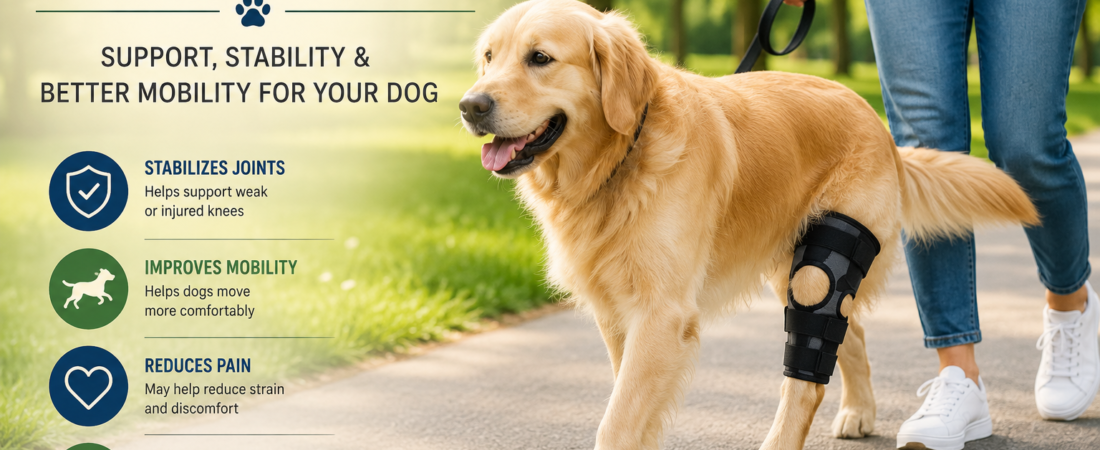
Dog Knee Brace Guide: Benefits, Recovery Support & Care Tips for Dogs
When a dog stops running, climbing stairs, or playing as they used to, it is often a sign of discomfort in their legs or joints. Frequently, injuries, advancing age, or ligament issues can make it difficult for dogs to move around. In such instances, a Dog Knee Brace can serve as a helpful solution.
This supportive device helps stabilize the knee, facilitates easier movement, and reduces pressure on weakened joints.
What is a Dog Knee Brace?
A Dog Knee Brace is a supportive band or strap designed to be worn around a dog’s leg and knee. Its primary objective is to provide additional support to the knee and help maintain balance while walking.
Some braces are designed to provide mild support, while others are utilized for severe ligament injuries or during the recovery process.
A Dog Knee Brace is a supportive device used to stabilize a dog’s knee, alleviate pressure on ligaments, and assist with mobility. Dog braces are commonly used for conditions such as ACL injuries, arthritis, post-surgical recovery, and age-related joint weakness. Proper fitting and regular cleaning are essential to ensure the device’s effectiveness.
In Which Situations Can a Dog Brace Be Useful?
Not every dog requires a brace; however, in certain situations, it can prove to be highly beneficial.
- ACL or CCL Injuries: Ruptured knee ligaments are a common issue observed in many pet dogs. In such cases, a Dog ACL Brace can help provide the necessary support to the knee joint.
- Age-Related Joint Weakness: As dogs age, their knee joints often begin to weaken. In these instances, a Dog Leg Brace can provide additional stability during movement.
- Post-Surgical Recovery: Some veterinarians recommend using a brace for a limited period following surgery to protect and stabilize the knee joint during the recovery phase. 4. Highly Active Dogs
Dogs that are highly active-running, jumping, or engaging in outdoor activities—may require support following a minor injury or strain.
Key Benefits of a Dog Knee Brace
Improved Balance and Support
The brace helps stabilize weak knees, making it easier for the dog to walk.
Reduced Pressure on Ligaments
A Dog ACL Brace can alleviate excess strain on the affected area of the knee.
Improved Mobility
For some dogs, wearing a brace makes climbing stairs and performing normal daily activities much easier.
Non-Surgical Support Option
In certain situations, a brace can serve as a temporary support solution, particularly when immediate surgery is not feasible.
Signs Your Dog May Need a Knee Brace
- Limping while walking
- Placing less weight on one leg
- Frequently sitting down
- Difficulty climbing stairs
- Swelling around the knee
- Reduced interest in playing or running
If these symptoms persist, it is essential to consult a veterinarian.
How to Choose the Right Dog Brace?
Select the Correct Size
A brace that is too tight can cause skin irritation or chafing, while a loose brace will fail to provide adequate support.
Look for Comfortable Materials
Braces featuring soft, adjustable straps tend to be more comfortable for the dog.
Choose Based on Specific Needs
Each dog brace model is designed for a specific purpose; therefore, it is crucial to select one that addresses the specific underlying issue.
Consult a Veterinarian
For serious injuries or chronic conditions, expert advice from a veterinarian is invaluable.
How to Care for a Dog Knee Brace?
Clean Regularly
The brace should be cleaned periodically to prevent the accumulation of dust, dirt, and odors.
Check the Skin
Inspect the skin daily to ensure the brace is not causing any redness or irritation.
Avoid Wearing for Extended Periods
In many cases, it is advisable to remove the brace during periods of rest or sleep, unless a veterinarian advises otherwise. Start Gradually
Some dogs take time to get accustomed to wearing a brace.
Is a Dog Knee Brace an Alternative to Surgery?
Not in every situation. A brace can be helpful for minor issues, but severe ACL or ligament injuries may require surgery.
For optimal results, the use of a brace should be combined with balanced exercise, weight management, and veterinary advice.
Conclusion
A Dog Knee Brace can provide valuable support for dogs suffering from knee weakness, ligament injuries, and age-related issues. When used correctly, it can help improve their mobility and comfort.
However, for any serious condition, seeking advice from a veterinarian is the safest approach rather than attempting self-treatment.
FAQ
Can all dogs wear a knee brace?
No; the use of a brace depends on the dog’s specific condition and a veterinarian’s recommendation.
How long should a dog wear an ACL brace?
This depends on the severity of the injury and the recovery process.
Can a dog walk normally while wearing a brace?
Many dogs begin to feel comfortable walking with a brace within a few days.
Is a dog leg brace useful for elderly dogs?
Yes, it can help provide additional support and improve balance.
Is it necessary to clean the brace every day?
Not necessarily every day, but regular cleaning is essential to prevent skin-related issues.